

I fell into this myself. New platform, new algorithm update, new format, new tool. It's exhausting, and it's mostly noise.
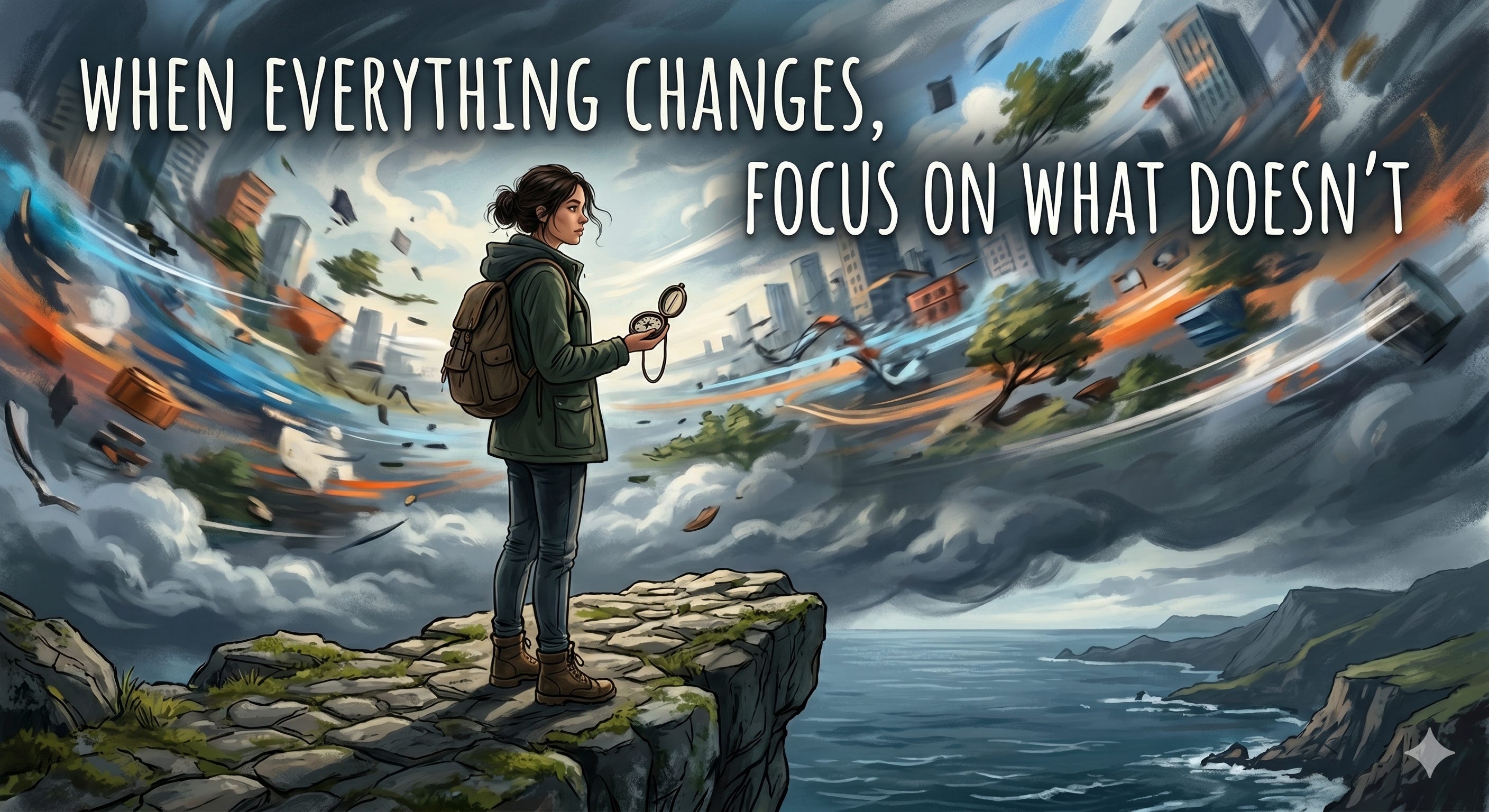
The question I keep coming back to is simpler: what doesn't change?
The constants nobody talks about
Your audience still needs to discover you. That's not changing. What changes is where they spend their time, and the platforms shift constantly. But the underlying need, to be findable where your people already are, is permanent.
Being present in the right place is only half of it. You also want to catch them in a moment when they are actually open to receiving your message. Not every moment is equal. Someone scrolling at midnight half-asleep is a different context than someone actively searching for a solution to a problem they are stuck on.
The filtering problem
Our brains are now extremely good at ignoring marketing. We are hit by thousands of messages every day. The filter has gotten stronger every year and it is not getting weaker.
This means the attention problem doesn't go away. It gets harder. And the solution doesn't change either: your message has to earn the stop. The scroll stop, the read, the click. That's what hooks are for. That's what visual storytelling does. Not tricks, but genuine pattern interrupts that signal "this is different, this is worth a second."
Attention is easy to lose
Getting someone to stop is one thing. Keeping them is another.
People are distracted constantly and they forget quickly. What felt relevant thirty seconds ago is gone. So the second challenge, which also doesn't change, is keeping them there once you have them.
Open loops work. Storytelling works. Visual cues that make someone want to know what happens next work. The mechanism is as old as campfire stories. The application changes. The principle doesn't.
The platform trap
Every platform wants to keep users on the platform. That is their entire business model. Fighting that is a losing game.
The smarter move is to work with it. Don't try to pull people off Instagram into your funnel the moment they see your post. Engage them on Instagram first. Lead them to more of your content on Instagram. On Substack, reference other pieces you've written. On a blog, use internal links that deepen the visit. On Reels, point people to other Reels in your profile.
Build the relationship where they already are. The platform will reward you for it. And your audience will trust you more for not immediately trying to drag them somewhere else.
The actual strategy for uncertain times
You cannot stay on top of every trend. A new one is always coming. The brands that chase each one end up exhausted and inconsistent, with no clear identity and no compounding momentum.
What you can do is take one step back and identify the principles that will still be driving decisions ten, twenty, fifty years from now.
Be discoverable where your audience already spends time. Earn the attention, don't just interrupt it. Keep people engaged once you have them. Work with platform dynamics rather than against them.
None of that is going out of style. Build your strategy on the things that won't move, and you'll have something that holds up no matter what changes next.
One of the best ways I’ve found to do so is by building a SEvO Pyramid for your brand!